Emeth Enters the Stable
The Last BattleEmeth Enters the Stable is a decisive test of the claim that Aslan and Tash are one: Emeth takes that claim seriously enough to enter the Stable in search of Tash, and his passage reveals that the door does not mean what the authorities outside say it means. The event begins as a dispute over who may approach the Stable, becomes a deception staged to control the crowd, and is later clarified as Emeth’s arrival on the other side alive and able to see the world beyond.
Emeth’s claim to enter
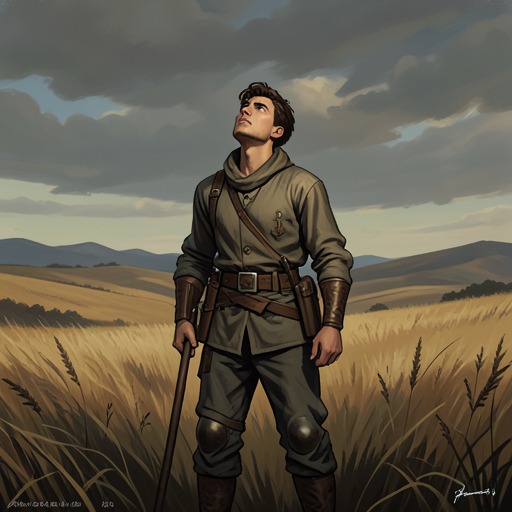
Emeth is a young, tall, slender Calormene, described as handsome in a dark, haughty manner. He speaks from the edge of the crowd, where he is easier for Jill and Eustace to see than those nearer the fire. His formal address, “My Father,” marks his place in the Calormene military hierarchy: ordinary soldiers use the title for officers, while officers address senior officers in the same way. The captain rebukes him for speaking out of turn and calls him a boy, but Emeth answers that he is younger without being excluded from the blood of the Tarkaans or from service to Tash.
His reason for insisting on entry follows directly from the claim promoted by the Ape and the Calormene leadership. If Aslan and Tash are one, Emeth argues, then Tash himself must be inside the Stable. He therefore rejects Rishda Tarkaan’s assertion that the Stable is for the Narnians and has nothing to do with him. Emeth’s devotion is not merely a slogan he repeats: he says he would gladly die a thousand deaths for one sight of Tash’s face. When Rishda dismisses the matter as too elevated for him to understand, Emeth asks whether the Ape has lied. The question turns the rulers’ own religious claim into a demand that they answer for it.
The decision and the staged death
Emeth does not withdraw when the Ape swears that Tash and Aslan are one. Instead, he says he is utterly determined to enter. The Dwarfs’ taunts add public pressure: they ask why the Calormenes allow Narnians in but keep one of their own people out, and what is being concealed from the Calormene soldiers. Rishda then disclaims responsibility for what may happen, calling Emeth rash, and permits him to go in. The sequence makes Emeth’s passage both a choice grounded in belief and a moment in which the leaders’ exclusionary rules are challenged from within their own ranks.
He walks across the open grass between the bonfire and the Stable with his hand on his sword-hilt and his head held high. Jill is moved by his solemn expression. Jewel tells Tirian that, Calormene though Emeth is, he almost loves him and considers him worthy of a better god than Tash. That response sharply distinguishes Emeth’s conduct from the political manipulation around him: his allegiance is to the promised encounter, not to the leaders’ convenience.
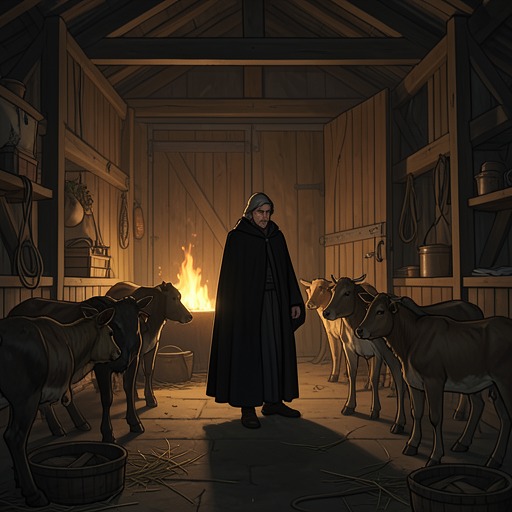
Emeth opens the Stable door, enters, and closes it behind him. After a short wait, a figure in Calormene armour reels out and falls. Rishda identifies the figure to the crowd as Emeth, claims that the young man has seen Tash and died, and presents this as a warning against entering. But Tirian and his companions can see from nearby that the dead man is not Emeth. He is older, thicker-set, shorter, and bearded. The false identification makes the supposed proof of Tash’s danger part of the deception: what the crowd is told to accept does not match what the witnesses closest to the door can see.
What the door reveals
Much later, Lucy’s account supplies the other side of Emeth’s entrance. On the far side of the door, she and the others had seen a Calormene sentry arrive with a drawn sword and take up a position beside the entrance. He appeared unable to see or hear them, and they inferred that he had been ordered to attack some arrivals and spare others. When the door opened again, a young Calormene entered. The sentry was surprised, but the newcomer had time to ready himself, fought him, and killed him. He then advanced towards the group, able to see them and the surrounding place, while repeatedly asking where Tash was and saying that he had come to Tash. Lucy says that he went away elsewhere; she liked him.
Lucy’s description identifies this newcomer with Emeth’s earlier entrance, while making clear how little the crowd outside could know. The account also distinguishes Emeth from Ginger, the Cat who had entered before him: the sentry’s surprise at the young man, his fight with the guard, and his ability to see the people beyond the door are not the staged pattern Rishda’s explanation encourages the crowd to imagine. Emeth’s passage is therefore not the fatal encounter advertised outside. He survives, reaches the world beyond the Stable, and begins looking for the god he expected to meet.
Significance in the ending
The episode draws its force from the gap between Emeth’s sincere expectation and the false story told about him. He enters because the claim that Tash is inside has been presented as truth; Rishda then uses an older dead man to make the crowd believe that Emeth has been killed. Later evidence reverses that public account. The deception can mislead those held at a distance, but it cannot change what happened to Emeth on the far side of the door.
The door episode also belongs to the book’s larger movement from the threatened end of Narnia to a new beginning. At the end, Aslan calls time, the world outside the Stable is brought to its end, and the children learn that a real railway accident has killed them and their parents. Aslan describes the end of their earthly lives as the beginning of the Great Story. Emeth’s entry anticipates that passage between endings and beginnings: the door that Rishda uses to terrorize the crowd is also the threshold through which Emeth reaches a different reality. His confidence in the claim that Tash awaits him does not make the leaders’ account true; instead, his actual arrival beyond the door reveals the difference between sincere devotion and the political falsehood built around it.